
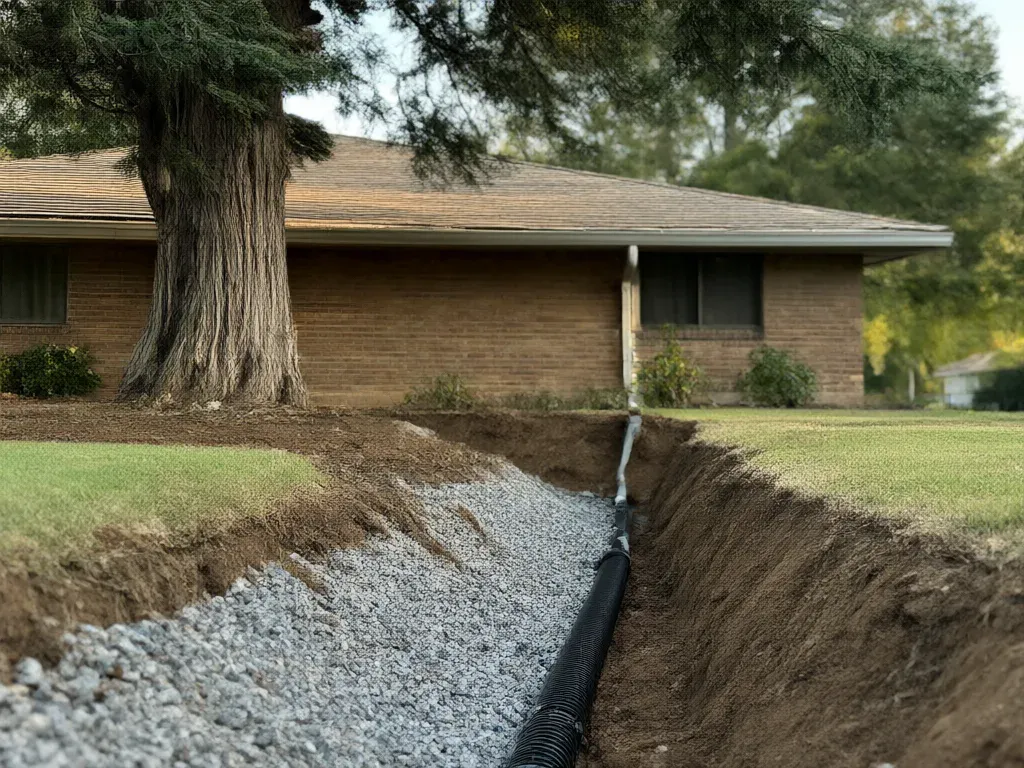
Foundation Drainage and Water Management in Richardson, TX
Richardson Superior Foundation Repair offers professional foundation drainage and water management in Richardson, TX with 18 years of watching what water does to clay under a slab. We install French drains, buried downspout lines, surface drains, regrading and 60-mil root barriers, all aimed at keeping the soil around your foundation at an even moisture. Most drainage jobs take 1 to 2 days on site.
Expansive clay doesn't care how good your piers are if one side of the house stays soaked and the other bakes. Uneven moisture is what makes a slab corner drop or a hallway heave. We fix the water first on almost every repair we do, and sometimes the drainage is the whole job.
Get a FREE Estimate
Or call (972) 480-3656
Foundation Drainage Options
Most lots need two or three of these, not all six. The lot walk tells us which.
French Drains Along the Foundation
Where water collects in a side yard or against the slab, a French drain gives it somewhere to go. Our trenches run 18 to 24 inches deep with 4-inch perforated pipe in washed 3/4-inch gravel, wrapped in filter fabric and sloped at least 1%. They run $35 to $60 per linear foot.
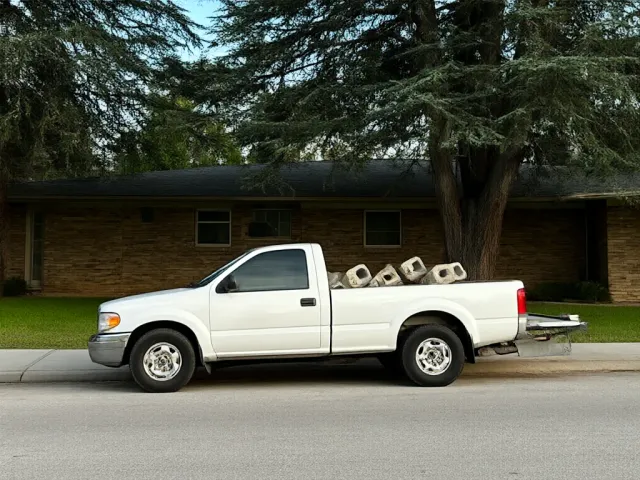
Downspout Drain Lines
A downspout that dumps at the slab corner puts a whole roof section's water into one spot. We extend it to discharge at least 5 feet out or tie it into a buried 4-inch line with a pop-up emitter, $350 to $900 per downspout.
Foundation Regrading
Flowerbeds built up over the years and settled fill around the slab often slope toward the house. We cut and fill so the soil falls at least 6 inches within the first 10 feet, the residential code standard, and pull back bed edging that traps water. Regrading runs $1,200 to $3,500.
Surface Drains and Catch Basins
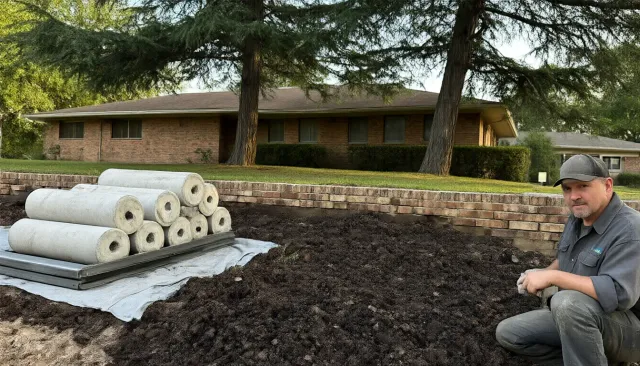
Low spots and patios that pond after rain get a catch basin feeding solid pipe to the curb or a lower part of the lot. Unlike a French drain, a surface drain moves water away fast instead of letting it soak in.
Root Barriers
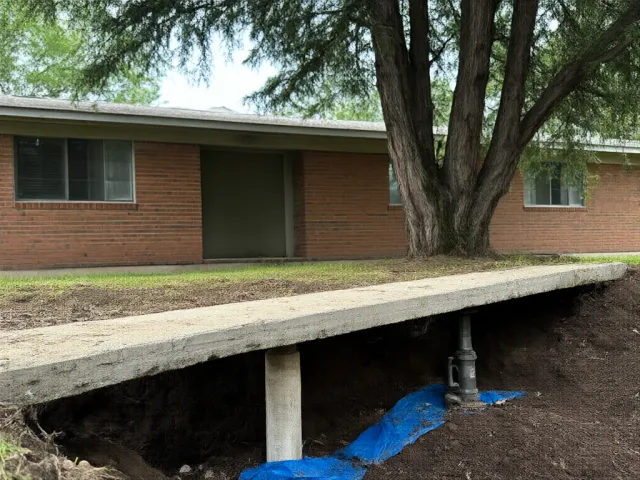
A tree near the slab pulls moisture out of the clay all summer, and the corner drops. A 60-mil HDPE barrier trenched 48 inches deep between the tree and the house keeps the roots off the foundation side. It runs $40 to $65 per linear foot and usually saves the tree.
Foundation Watering Systems
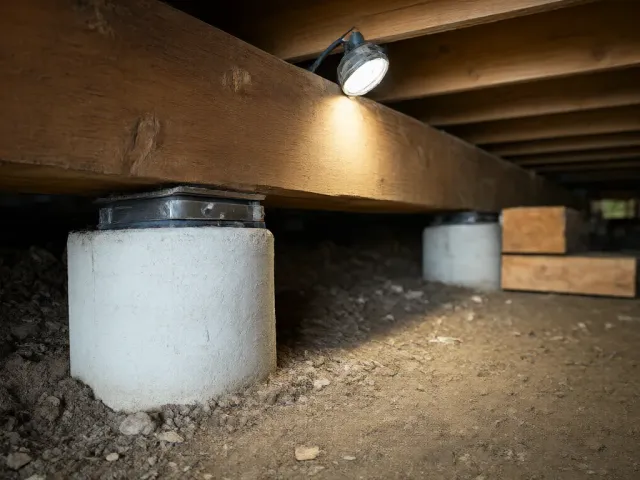
In a dry summer the clay at the slab edge shrinks away from the beam. A soaker hose 12 to 18 inches from the slab, on a timer, keeps that soil from shrinking as hard. It's the cheapest foundation protection there is.
How Water Moves the Clay Under a Foundation
Blackland Prairie clay swells when it's wet and shrinks when it dries. The real problem isn't wet or dry, it's uneven. A soaked corner next to a dry one is how a slab bends.
The usual culprits are easy to spot once you know them: a downspout emptying at the slab, a sprinkler head spraying the grade beam, an AC condensate line dripping in one spot all summer, and a flowerbed edge that holds water like a tray.
On the other side are trees and bare, sunbaked strips along the west wall. Those dry the clay faster than the rest of the lot. Good drainage gets water away from the wet spots and keeps the dry ones from cracking open.
When Drainage Is the Whole Repair
Some corners are only a little low. If the survey shows less movement than the engineer would pier, we'll tell you to fix the water and watch it through a season before buying piers.
That might mean a downspout tied into a buried line, a regrade and a soaker hose. It costs a fraction of a pier job, and a re-check after the next dry summer tells you whether it worked.
If the house has already dropped enough to need piers, we still do the drainage. Piers hold the house up. Drainage keeps the clay around them from swinging between soaked and bone dry.
Drainage Materials and Specs We Use
Cheap drainage fails quietly. Corrugated pipe crushes, unwrapped gravel silts up and a drain with no slope just stores water against the slab.
Pipe, gravel and fabric
We use 4-inch perforated pipe in washed 3/4-inch gravel, wrapped in filter fabric so the clay doesn't plug it. Every run falls at least 1%, about 1/8 inch per foot, to a real outlet.
Root barrier panels
Our root barriers are 60-mil HDPE, trenched 48 inches deep. Thin landscape edging isn't a root barrier, no matter what the label says.
Drainage warranty
Drainage installs carry a 5-year workmanship warranty. If a line we installed clogs or a grade we set holds water, we come back and fix it.
Our Foundation Drainage Process
Walk the lot
We trace where every downspout, sprinkler head and condensate line puts water, and where the yard ponds after rain.
Measure the floor
A manometer survey tells us whether the house has moved and which side the water is hurting.
Design the drainage
We lay out pipe runs, outlets and grade changes, and you get a written price within 1 business day.
Install and test
We dig, set pipe and gravel, regrade and run water through every line before we backfill.
Set up the watering
We show you where the soaker hose goes and how to set the timer, and we'll re-measure after the next dry summer.
Foundation Drainage Questions
Can drainage alone fix my foundation?
Sometimes. If the movement is small and seasonal, fixing the water can stop it from getting worse. If the house has already dropped past what the engineer accepts, it needs piers too, and the drainage protects the repair.
How deep should a French drain be around a foundation?
Ours run 18 to 24 inches deep with 4-inch perforated pipe in washed gravel and filter fabric. Depth matters less than slope and a real outlet. A drain with nowhere to go just stores water next to the slab.
Should I water my foundation?
In a dry summer, yes. A soaker hose 12 to 18 inches from the slab, on a timer, keeps the clay from shrinking away from the beam. Don't flood it. The goal is even moisture, not mud.
Do I have to cut down the tree near my house?
Usually not. A 60-mil root barrier trenched 48 inches deep between the tree and the slab cuts off the roots on the house side, and most trees do fine with the roots they keep.
How much does foundation drainage cost?
French drains run $35 to $60 per linear foot, downspout lines $350 to $900 each, regrading $1,200 to $3,500 and root barriers $40 to $65 per linear foot. Most homes need two or three of those, not all of them.
Fix the Water Before You Buy Piers
Call (972) 480-3656 to set up a free foundation inspection. We'll walk the lot, measure the floors and tell you whether drainage alone will do it.